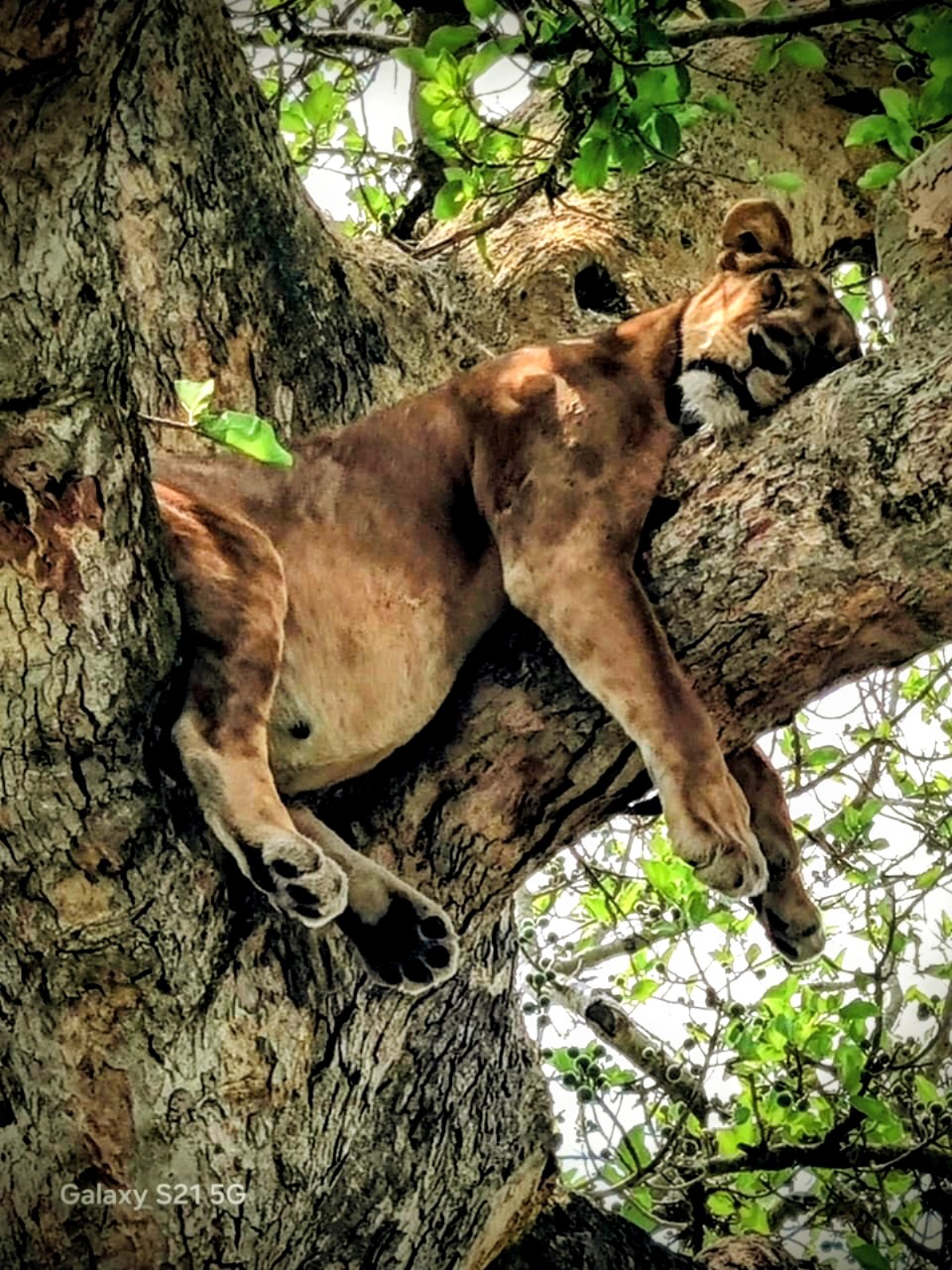
Tree-climbing lions are a rare Encounter within Ishasha sector of Queen Elizabeth National Park in Uganda and Lake Manyara in Tanzania being the most reliable places to see them. The Serengeti offers occasional sightings, but its lions are more famous for resting on rocky outcrops.
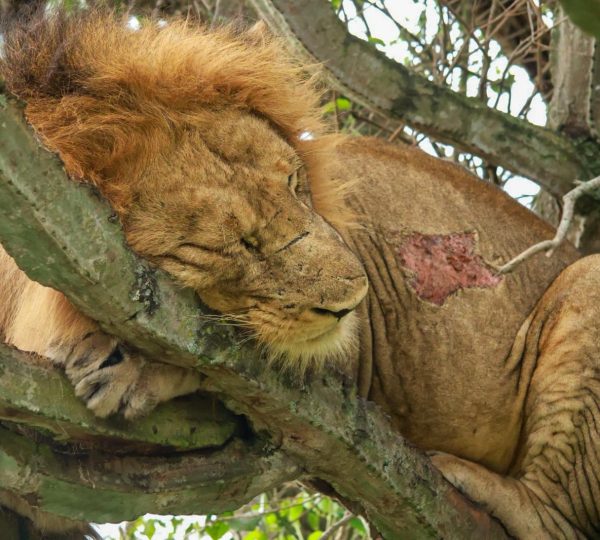
In the heart of Ishasha, lions defy their reputation as ground dwellers, the kings of the jungle control from the treetops, covered across branches. Their silhouettes command the savanna from above- a rare and mysterious behavior found only in this corner of Africa. As the midday sun blazes and the tsetse flies swarm below, Ishasha’s prides retreat into the cool embrace of fig and acacia trees, turning the forest canopy into their throne. To witness these majestic cats suspended in the trees is to glimpse one of nature’s most extraordinary secrets.
Explore Africa Through Your Lens
Why Ishasha Lions Climb Trees?
Trees provide shade and cooler breezes higher up, helping lions regulate body temperature during hot days, To Avoid wet ground especially after rains, lions may climb to avoid damp or muddy terrain.
Lions sometimes climb to escape biting flies or ticks that thrive near dung and wet grass. Sometimes they climb to avoid annoying flies from droppings; Elevated positions reduce exposure to swarms of insects following other animals.
Lions may climb to escape charging elephants, buffalo, or other large herbivores. Though not natural climbers, trees can serve as emergency safe zones for lions
For Strategic Advantage, Better vantage point– From branches, lions can scan the savanna for prey or threats. Elevated positions help them monitor territory more effectively.
Young lions often climb out of curiosity or play, testing their strength and agility. Lions help the young cubs to develop skills- Though clumsy compared to leopards, climbing helps cubs build coordination.
Why Wildlife–Community Conflict Threatens Lions
When lions prey on livestock, communities sometimes resort to poisoning or spearing them. Expanding farmland and settlements reduce natural prey, pushing lions closer to human areas.
11 lions (including cubs and lionesses) were killed in Ishasha — this is a devastating example of how quickly a pride can be wiped out when they are not controlled.
https://www.nationalgeographic.com/animals/article/three-legged-lion-uganda-symbol-of-hope
Conservation vs. Tourism
To strengthen Responsible travel-the priority isn’t just visitor numbers — its ensuring lions survive for future generations.
Tree-climbing lions in Ishasha are a global attraction, drawing travelers and supporting local economies.
Protecting them safeguards biodiversity and cultural heritage, while also reducing conflict with communities.
Best Time & Tips to Visit Tree-Climbing Lions in Ishasha Sector
Open Year-round-Ishasha welcomes visitors throughout the year.
Dry season (June–October) is the most rewarding time to visit. Vegetation is less dense, making wildlife easier to spot. Lions are more likely to climb trees to escape the direct sun and biting insects.
Early morning drives-Lions are active, and cooler temperatures make sightings more likely.
Afternoon drives are also rewarding as the sun intensifies, prides often retreat into fig and acacia trees, offering iconic photo opportunities.
Game drives in Savanna-Big Four Wildlife Encounter
Experts Tips for Spotting Lions
Patience is key: Lions may remain still for long periods. Take time to scan the canopy carefully.
Observation skills: Look for golden silhouettes draped across branches — they blend surprisingly well with the foliage.
Silent respect: Keep noise low to avoid disturbing them.
Conservation & Responsible Travel!
We make sure our visitors avoid congestion- Overcrowding disturbs the lions and stresses the ecosystem.
Carrying capacity matters-Ishasha’s ecosystem can only sustain a limited number of vehicles and visitors at a time.
Vulnerable species- Lions are red-listed as vulnerable; irresponsible tourism accelerates their decline.
Eco-friendly practice: As a responsible company, we prioritize conservation over numbers — protecting lions comes before maximizing guests